Mimosa Cheese Pheno - Live Rosin Fresh Press 90u (MUR01)
Ratings
Details
- Farmer
- Secret
- Strain
- Mimosa Line (Cheese pheno)
- Category
- live rosin
Tech Sheet
- Producer: Secret
- Strain / Genetics: Mimosa Line (suspected Cheese pheno)
- Lineage: Mimosa Line
- Type: Fresh Frozen Fresh Press, single press
- Mesh / Microns: 90u
- Lot: MUR01
- Tasting date: 05/05/2026
Appearance (8/10)
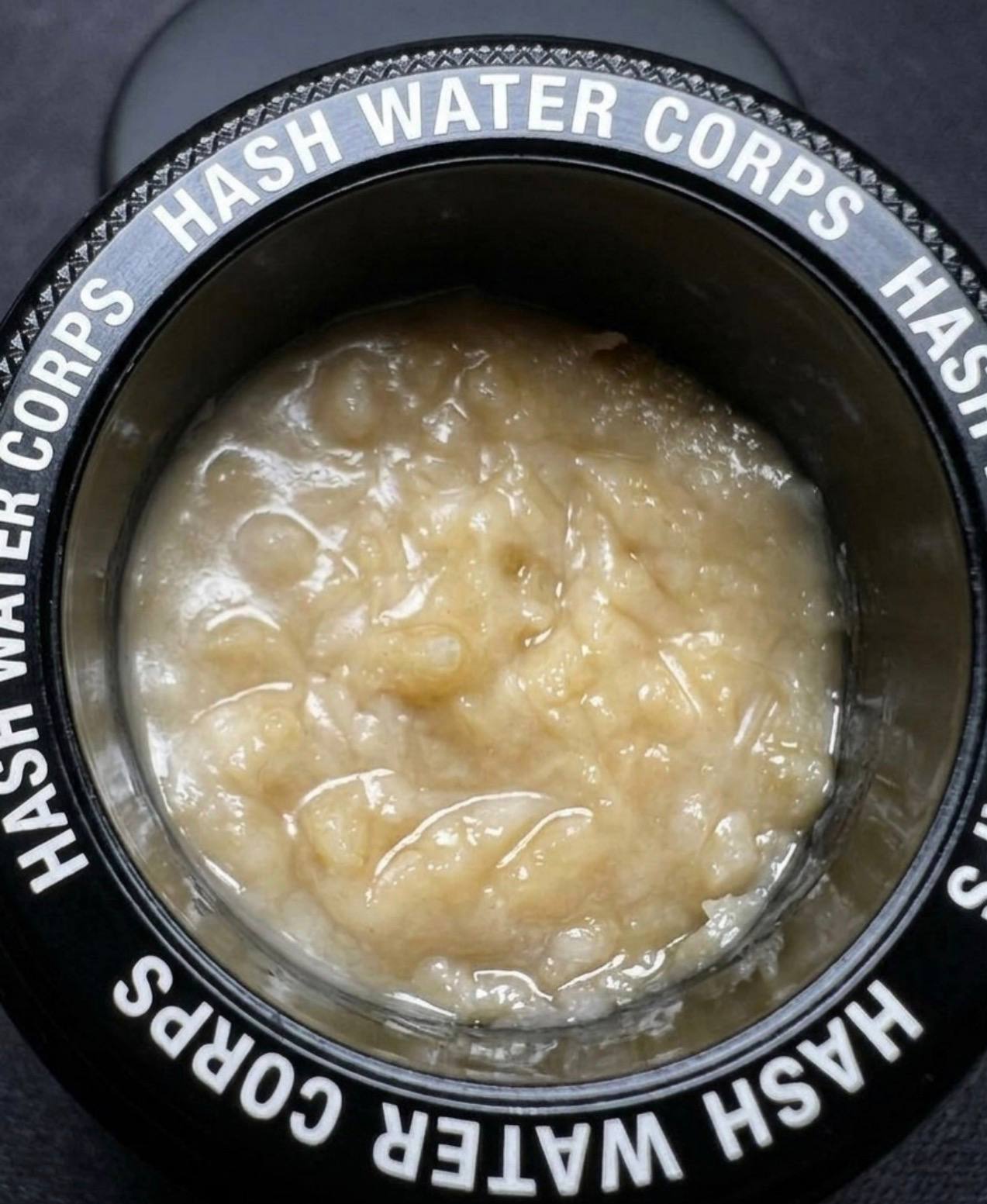
Vibrant gold, the typical color you expect from a well-executed first fresh press. Classic fresh-press texture with that temperature-dependent stability: at low ambient temperature it stays firm, and as soon as it warms it begins to flow.
Visual cleanliness is medium-high. Good initial wash and press technique is evident, with no obvious greens or strange stains to the naked eye.
Under the microscope the first weak point appears: cross-contamination is detectable, both from handling and from the production environment itself. It doesn’t invalidate the product, but it’s the first hygiene adjustment the producer should look at before a follow-up batch.
Aroma (6.5/10)
- Intensity: 6/10
- Primary notes: Citric lime.
- Secondary notes: Sour acid.
- Evolution: Flat and linear.
This is where you can tell the product hasn’t reached its ceiling. The aroma stays in a single layer, monolayer: it smells like lime and not much else. It lacks the depth you’d expect from a mature Mimosa, without those creamy or lactic layers the genetics can deliver when properly stabilized.
There are no defects in the strict sense (no mold, no ammonia, no dried-grass smell), but there’s no aromatic journey either. What you smell when you open the jar is what you keep smelling five minutes later.
Flavor (6/10)
- Entry note: Sharp citric (lime).
- Body: Light, with no creamy or earthy nuances to balance the acidity.
- Aftertaste: Brief sour.
- Vapor smoothness: Medium.
- Melt quality: 6/10.
The flavor confirms what the aroma anticipated. Pronounced citric entry, body too light, and a sour aftertaste that fades quickly. From a 90u fresh press you expect more nuance: creaminess, an earthy backbone, some sweet note to close the experience. It isn’t there.
The melt is decent but not outstanding. It melts, bubbles, leaves some residue. Within normal range for a single-press fresh press, but it doesn’t stand out. The general feeling is that the genetics aren’t yet developed enough to deliver stable, complete terpenes.
Effects (6.5/10)
- Type: Balanced.
- Onset: Energizing and stimulating.
- Progression: Calm and inspiring, inviting creativity without immediate heaviness.
- Estimated duration: Short, around 20 minutes.
- Comedown quality: Heavy.
The effects start well. Quick onset, energizing, with a creative note that fits what you’d expect from the Mimosa branch. The problem starts at the end: duration is short (20 minutes for the main effects is low for quality live rosin) and the comedown is noticeably heavy.
That comedown is the strongest signal that something in the cultivation isn’t clean. Without a residue panel nothing can be confirmed, but the pattern (abrupt end + heavy physical sensation + absence of CBD to soften it) fits with the use of synthetic fertilizers without a proper flush at the end of the cycle. It’s the most reasonable hypothesis given the data available.
Additional Notes
Visually the product delivers what you’d expect from an ice/live rosin with good presence: golden, stable, no glaring surface defects. But the soul of the variety (its terpene profile) is still green. It’s genetics that needs more stabilization and more selection to escape that monolayer aroma.
It’s not a bad product. It’s a halfway product. It works for a creative session, but it isn’t one of those that leaves you wanting to come back to it tomorrow.
Recommendations for the Producer
-
Genetic evolution. Keep working the Mimosa/Cheese line to find more complex layers. Flavor depth comes from selection across several generations, not from the first round. Patient phenohunting and more comparative tests between mothers.
-
Transition to organic cultivation. The heavy comedown is the most alarming symptom. It suggests accumulation of salts or chemical nutrients that muddy the final experience. Migrating to 100% organic cultivation (or at least to a much more aggressive flush protocol in the final 2-3 weeks) would significantly change the cleanliness of the effect.
-
Contamination control in the press environment. The cross-contamination seen under the microscope is avoided with basic protocols: a separated press area, collection with dedicated gloves and tools, between-batch cleaning, and stricter ambient air control.
There’s a solid base here. With two or three more cycles of genetic selection and cleaner cultivation, this producer could deliver something notable. MUR01 is the starting point, not the destination.